
Should I create a website for my Airbnb? If you own a luxury holiday home, my honest answer is: possibly. But not simply because somebody promised you a calendar full of commission-free bookings.
A website can be a useful part of your business. It can also become a beautiful page nobody visits. The difference starts before you choose a font, a booking widget or a designer.
It starts with three questions: who will find it, why would they trust it, and do the numbers make sense?
Should I create a website for my Airbnb?
Start with demand, not design.
A booking platform brings an audience. Your own website doesn’t arrive with one attached. That’s the bit worth saying out loud before anyone talks about the upside.
Think about the people you can reach independently. Perhaps your estate has a distinctive name. Perhaps you already run an Instagram account, work with local businesses or receive enquiries through your own network.
Those are starting points for a direct channel. They aren’t guarantees, but they give the website a job beyond looking impressive.
For a luxury property, that job might be answering detailed questions, presenting the whole estate properly and helping an interested person enquire with confidence. You don’t need to replace every platform booking for that to be useful.
A good idea for some properties.
Not a compulsory upgrade for everyone.
I’d take the idea seriously if several of these sound familiar:
- You already receive enquiries outside booking platforms.
- You have your own marketing activity or local referral relationships.
- Your property has distinctive features that need more explanation.
- The value of a typical stay gives you room to cover direct-channel costs.
- You’re prepared to organise payments, policies and guest communication properly.
I’d slow down if you’re expecting a new domain to generate demand by itself, your photographs no longer reflect the property, or you haven’t decided who handles enquiries.
And if you’re only renting the place occasionally, a simple enquiry page—or keeping your current setup—may be enough. The right answer isn’t always a bigger website.

What could one booking change?
Let’s use an estate charging A$1,000 a night. Four nights plus a A$400 cleaning fee gives a A$4,400 booking subtotal.
Airbnb’s Australian guidance describes a 15.5% host service fee, with exceptions. Stripe’s published Australian standard online rate is 1.65% plus A$0.30 for domestic cards. Here’s a deliberately limited comparison using those rates.
| Example route | Listed fee | After that fee only |
|---|---|---|
| Airbnb at 15.5% | A$682.00 | A$3,718.00 |
| Direct: one domestic-card payment | A$72.90 | A$4,327.10 |
Sources: Airbnb fee guidance and Stripe Australian pricing, checked 3 November 2026. This is not a profit comparison. Any additional GST on Airbnb’s fee is excluded; check your invoice. Stripe’s stated card fees include GST. Separate charges, different card types and multiple payments can change the result.
The difference is A$609.10 before website, software, marketing and other direct-channel costs. Five comparable bookings would produce A$3,045.50 before those costs—not a forecast, just arithmetic.
That is not “free money”. Airbnb’s fee also funds services including payment processing, marketing and support. Direct booking means arranging your own operating setup.
Compare your annual costs with a conservative estimate of independently acquired bookings. Keep applicable taxes, levies, insurance and your time in the picture. Holding the subtotal constant also doesn’t prove both routes would attract the same guest at the same price.
Beautiful is the opening.
Useful is the rest of the story.
A luxury holiday home website should feel like the property. But once the opening image has done its job, guests need answers.
Show the stay honestly.
Use current photographs, a clear layout and accurate sleeping arrangements. Explain practical limitations as well as highlights. A guest shouldn’t discover the steep stairs after paying.
Make trust easy to check.
Include genuine contact details, permitted reviews and accessible policies. Explain deposits, cancellation terms and what happens after an enquiry. Have suitable professionals review your booking agreement and insurance arrangements.
Give guests an obvious next step.
Use a supported booking flow or a clear enquiry form. Keep the route comfortable on a phone. Don’t ask guests to navigate an elaborate experience just to find availability.
Check how calendars actually connect.
Airbnb says its connected calendars automatically refresh every three hours. That means a plain calendar feed is not instant synchronisation. Check both directions, update timing and your provider’s safeguards before relying on instant booking across channels.
Source: Airbnb calendar synchronisation guidance. No website alone guarantees against double bookings.
DIY, an existing booking system,
or done for you?
If your booking software already includes a website, explore it first. It may cover the essentials without adding another tool.
A general website builder can also suit an owner who enjoys doing the work. Just check the booking connection, ongoing subscriptions, image handling and who fixes problems.
A done-for-you build makes more sense when you want a considered presentation without managing the design project yourself. Ask what’s included, what costs extra and what you can take with you if arrangements change.
There’s nothing second-rate about choosing the simpler option. The useful comparison is total cost, time and fit—not custom design versus a template as a matter of pride.
Keep your listings.
Respect their rules.
Your direct website should support independently generated demand, not act as a workaround for platform fees.
Airbnb’s current policy requires payments for current, future and repeat Airbnb bookings to remain on-platform. It also prohibits off-platform booking discounts and links that redirect an existing reservation or enquiry.
Don’t assume a previous Airbnb stay gives you permission to market direct bookings to that guest. Check the current platform rules and obtain appropriate consent for your own marketing.
Source: Airbnb pricing and payment transparency policy, checked 3 November 2026. Policies can change.
A practical website.
With room for the extraordinary.
At Sold by Scroll, I build affordable, done-for-you websites for luxury stays. If the decision makes sense for your property, here’s what that can give you:
01. A property-led presentation
Your own photographs and story, with a cinematic opening created from a suitable image.
02. Your own online address
A destination on your domain for independent marketing and enquiries.
03. A supported next step
A booking link, supported widget or enquiry route matched to your setup.
04. Someone to handle the website
You work with me directly. Ongoing hosting and care are available separately.
Before you decide.
Will a website bring bookings straight away?
It might, but don’t budget on it. Start with a realistic plan for reaching people.
Do I have to offer instant booking?
No. An enquiry-first approach may suit your operation better. Make response expectations clear.
How quickly can you build it?
My stated turnaround is seven calendar days after the deposit and complete photos and details are received. Missing content or delayed feedback moves the date.
Let’s see whether it makes
sense for your place.
I’m Ivan (Ivanski) Kramer, the Australia-based founder of Sold by Scroll. Tell me about your property, how people find you and the booking system you use.
We can work through the practical questions first. If a dedicated website isn’t the right next step, that’s a useful answer too.

Ivan (Ivanski) Kramer
Founder, Sold by Scroll · Australia-based
Affordable, considered websites for extraordinary places.
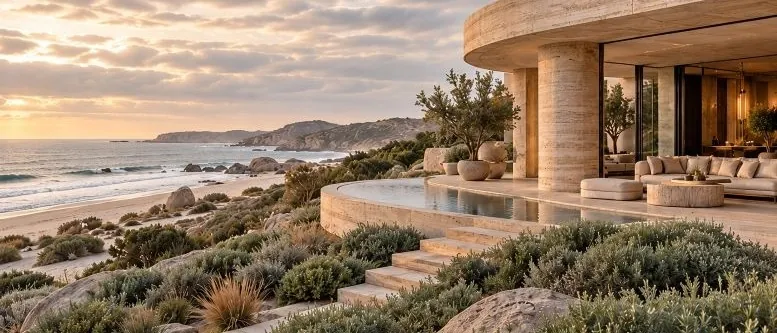
Property imagery is illustrative and supplied for this article, not evidence of completed client projects. Features depend on the agreed scope and supported third-party systems. Domain, booking-provider and ongoing costs are separate where applicable. General information, not tax, insurance or legal advice. Verify fees and policies before publishing or changing your setup.