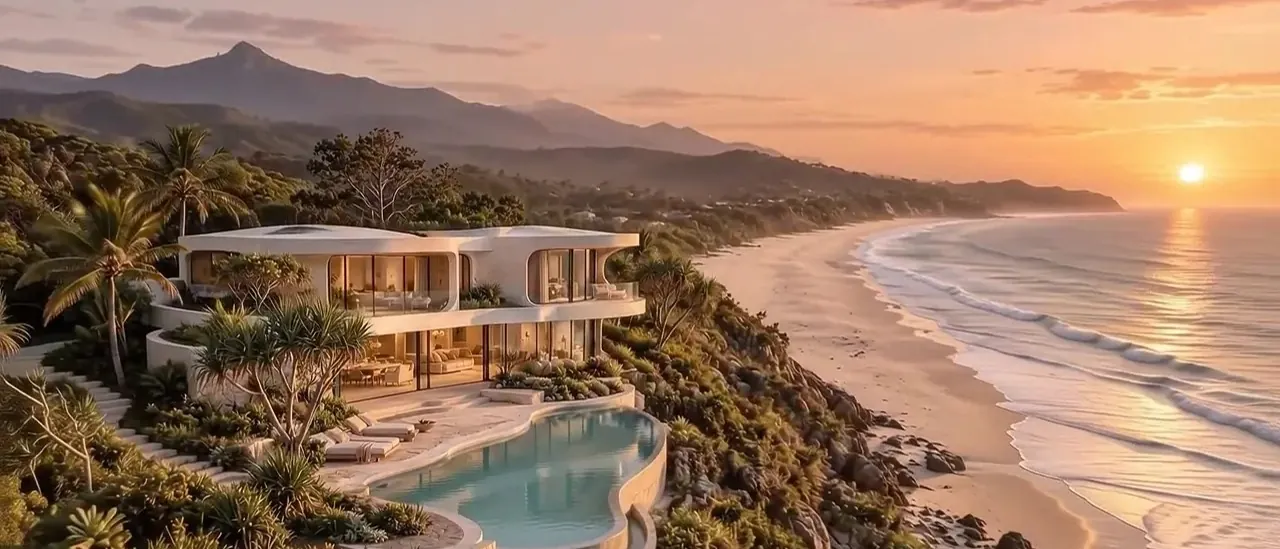
Wondering how to market your holiday home when the listing alone isn’t doing the place justice? Start with what makes the stay worth choosing—not another post that says “luxury escape”.
Your estate might have a remarkable view, a beautifully considered interior and a terrace everyone gravitates towards. But an interested guest still needs to understand something simple: why is this the right place for their trip?
Good marketing connects those two things. The feeling of being there, and the practical reasons to choose it.
How to market your holiday home:
choose who you’re talking to.
“Anyone who wants a beautiful holiday” sounds welcoming. It doesn’t give you much direction.
A multigenerational family has different questions from a couple planning a quiet week. One wants bedroom separation and enough dining space. The other might care about privacy, walkable coffee and somewhere lovely to read.
Pick one or two groups your property genuinely suits. Then write down the questions they ask before booking.
- How does the sleeping arrangement actually work?
- Is the outdoor space suitable for their group?
- What can they do without driving for an hour?
- What restrictions might make the property unsuitable?
You’re not excluding everyone else. You’re making your message specific enough for someone to recognise themselves in it.
Don’t just call it exceptional.
Show what’s different.
“An unforgettable luxury experience” could describe almost anything. “Six bedrooms across two wings, with a long table overlooking the headland” tells someone something useful.
Trade vague praise for concrete details. Describe the sheltered terrace, the separate reading room or the kitchen that makes cooking together enjoyable—if those things are really there.
Then connect the feature to the stay. Two living areas might mean different generations can spread out. A covered deck might make an outdoor lunch possible when the weather turns.
That’s a stronger story than stacking adjectives. It also helps guests decide whether your place fits, rather than attracting enquiries you were never going to convert.
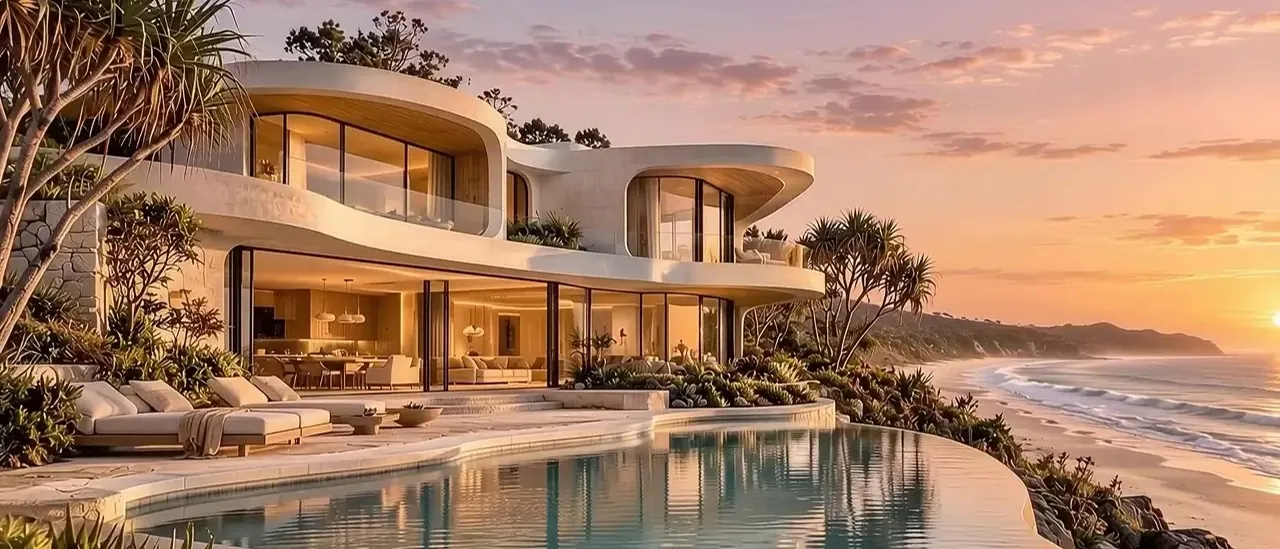
Your first photograph opens the door.
The next ones need to answer questions.
Choose an opening image that shows a genuine reason to stay: the outlook, architecture or main gathering space. Don’t lead with a decorative detail if it leaves people unsure what they’re looking at.
Then give the gallery a useful sequence:
- The property and its setting.
- The main living and gathering spaces.
- The bedrooms and sleeping arrangements.
- Bathrooms, kitchen and practical amenities.
- Outdoor areas, access and distinctive details.
That’s a starting point, not a rigid formula. The aim is to help a stranger build an accurate picture.
Airbnb recommends natural light, landscape images and a mix of wide, mid-range and close-up photographs. Its guidance also encourages showing details guests need to avoid surprises.
For your website, a panoramic crop can make a beautiful opening. Keep the original too: a 21:9 banner and a vertical social post need different framing. Don’t stretch one image into every shape.
And don’t let editing change the promise. Concept images can illustrate an idea, but they shouldn’t stand in for photographs of the real property a guest is paying to book.
Source: Airbnb’s listing photography guidance. These are presentation recommendations, not a guaranteed bookings uplift.
Your property name matters.
So does the explanation around it.
Use a consistent name across your independent marketing. On your website, explain what the property is and where it is. A poetic name alone doesn’t tell a new visitor whether it’s a holiday home, a wedding venue or a housing development.
Give the page a descriptive title and write useful text alongside the images. Google recommends descriptive titles, semantic HTML and expressing important visual information in text.
For photographs, use meaningful filenames and accurate alternative text. Describe the image rather than cramming location keywords into every caption.
These are foundations, not a promise of first-page rankings. You don’t need to publish dozens of thin articles pretending to cover every town nearby. Start with a clear, accurate page about the property itself.
Sources: Google’s developer SEO guidance and image best practices.
What would a better enquiry
actually be worth?
Before paying for more exposure, set a modest commercial question. What would a few additional booked nights contribute before costs?
| Illustrative scenario | Calculation | Gross accommodation revenue |
|---|---|---|
| One additional two-night stay | 2 × A$1,000 | A$2,000 |
| One additional two-night stay per quarter | 4 × 2 × A$1,000 | A$8,000 per year |
That is not profit or a forecast. Cleaning, operating costs, processing, software, marketing, taxes and any applicable levies still matter. It assumes available nights are genuinely additional, not bookings moved from another channel.
Use your own rate, costs and availability. Then track enquiries, booked nights and spending so you can judge what’s working—not just which post got the nicest comments.
A small plan beats
a complicated content calendar.
Choose your main audience. Refresh the photographs and description they’ll see first. Publish a handful of useful posts that point to a clear destination.
Walk through that destination on your phone. Can someone understand the house, find the important policies and enquire without getting lost?
Ask independently acquired enquirers how they found you. Record the source, whether the enquiry suited the property and whether it became a booking.
If you get attention but few enquiries, review the page and the offer. If you get unsuitable enquiries, sharpen the information. Don’t assume every problem needs a larger advertising budget.
Seven things an online home
can do for your estate.
At Sold by Scroll, I build affordable, done-for-you websites for luxury stays. The aim is to give your marketing somewhere useful to lead.
01. Show the whole property story
Bring the setting, rooms and distinctive details together in a considered sequence.
02. Give your marketing its own address
A destination on your domain for independent social content, referrals and enquiries.
03. Create a cinematic first impression
A suitable property photograph can become a cinematic opening without arranging a separate film shoot.
04. Answer questions before they become obstacles
Space for accurate layouts, amenities, permitted reviews and owner-provided policies.
05. Make the next step clear
A supported booking link, widget or enquiry flow suited to your existing operation.
06. Work comfortably on a phone
Readable copy, considered imagery and actions visitors don’t have to hunt for.
07. Keep website work off your list
You deal with me directly. Separate hosting and care options are available after launch.
Before you start.
Do I need professional photography?
Not for every post. For your main property presentation, assess whether the current images accurately show the place at its best. A skilled photographer may help.
Should I lower the price to get attention?
Check the audience, comparable stays, availability and presentation first. This article can’t establish the right rate for your property.
Will a website bring visitors by itself?
Don’t plan on it. It needs a realistic role in your marketing, not just a launch date.
Your estate has a story.
Let’s give it somewhere to live.
I’m Ivan (Ivanski) Kramer, the Australia-based founder of Sold by Scroll. If your place deserves a more considered online presentation, have a look around.
We can talk about your property, your current setup and what a dedicated website could usefully add. No hard sell. Just a clearer next step.

Ivan (Ivanski) Kramer
Founder, Sold by Scroll · Australia-based
Affordable, considered websites for extraordinary places.
Supplied property imagery is illustrative, not evidence of completed client projects or available accommodation. Example revenue is not a profit calculation or forecast. Features depend on agreed scope and supported systems. Domain, booking-provider and ongoing costs may be separate. No rankings, enquiries, booking share or financial outcomes are guaranteed.
One post. One useful idea.
One clear next step.
You don’t need every post to be a cinematic production. You need something worth noticing and an obvious way to learn more.
Try a room-by-room walkthrough for families. A quiet winter morning for couples. A short local itinerary using places you actually recommend.
Pair the visuals with a useful detail: how far the beach is, which room catches the morning light, or what the dining setup accommodates.
Then connect your own social profile to a relevant page. “Explore the house and enquire about dates” gives people a clearer instruction than “Dreaming of this?”
Your listing can remain part of your marketing mix. Your website gives independently acquired visitors another destination. Don’t use platform messaging or a current platform enquiry to steer guests away from its booking process.